

local-first storage retention
Your Local-First Workspace, Under Control
Flow-Like Studio now shows what lives on your device, explains every storage category, and can safely retire old local run logs on your schedule.
· Read article
Flow-Like Blog
Releases, deep-dives, comparisons, and tutorials.
Flow-Like Studio now shows what lives on your device, explains every storage category, and can safely retire old local run logs on your schedule.

How Flow-Like moved desktop board merging into a Web Worker, added sync lineage, and stopped background activity from waking the whole canvas.

Use Explore editions, audiences, schedules, and publishing controls to help people find relevant apps and packages.

Data Studio turns existing tables into ontologies you can explore, analyze, share across apps, automate through governed actions, and query with FlowPilot.

Suites package related Flow-Like apps into one governed, discoverable product while preserving each app's ownership, permissions, visibility, and lifecycle.

Flow-Like apps can now call one another through explicit roles, typed remote events, and traceable process cases — without dissolving their security boundaries.

Renewable credentials, asynchronous indexes, migration ordering, and retry boundaries were the real work behind Flow-Like's Aurora DSQL support.

The home screen is now built around FlowPilot, categories are first-class, and apps and packages live in one Explore hub — plus a long list of quiet fixes.
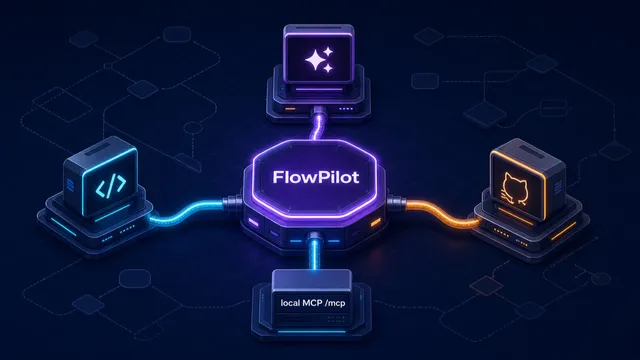
FlowPilot can now be driven by local coding-agent CLIs — Claude Code and Codex — alongside GitHub Copilot and your own models. They edit your flows through a local MCP server, not the shell.
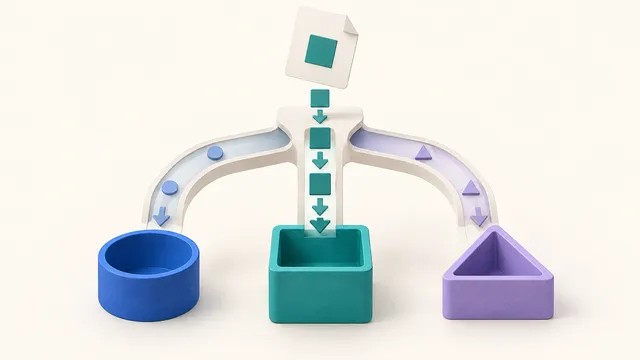
Use GLiNER2.5 to classify text, score it against a rubric, or estimate whether a statement holds, then connect the typed output to an explicit workflow branch.