
Local Vision, Useful Results: Face Analysis Comes to Flow-Like
Flow-Like adds local SCRFD face detection, ArcFace embeddings, age and gender estimates, verified model caching, and one ONNX acceleration policy across platforms.
Tag
18 posts in this topic.

Flow-Like adds local SCRFD face detection, ArcFace embeddings, age and gender estimates, verified model caching, and one ONNX acceleration policy across platforms.

Flow-Like now turns JSON Schema into practical variable and pin editors, adds a native User Profile surface, and gives flows safe access to project identity.

Flow-Like Studio now shows what lives on your device, explains every storage category, and can safely retire old local run logs on your schedule.

How Flow-Like moved desktop board merging into a Web Worker, added sync lineage, and stopped background activity from waking the whole canvas.

Data Studio turns existing tables into ontologies you can explore, analyze, share across apps, automate through governed actions, and query with FlowPilot.

Suites package related Flow-Like apps into one governed, discoverable product while preserving each app's ownership, permissions, visibility, and lifecycle.

Flow-Like apps can now call one another through explicit roles, typed remote events, and traceable process cases — without dissolving their security boundaries.

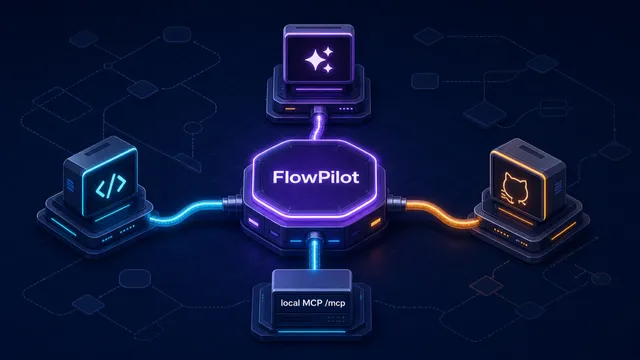
FlowPilot can now be driven by local coding-agent CLIs — Claude Code and Codex — alongside GitHub Copilot and your own models. They edit your flows through a local MCP server, not the shell.

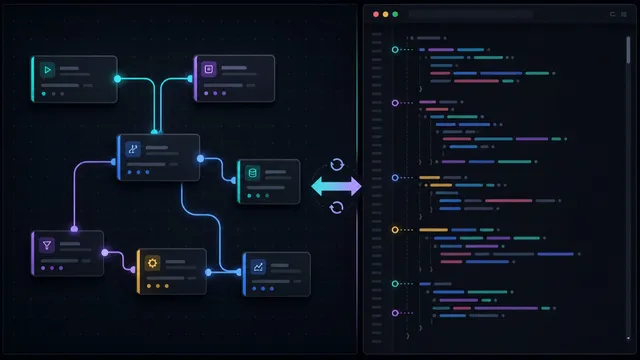
Meet FlowScript — a TypeScript-flavored text projection of a Flow-Like board that round-trips back into the graph. Read your workflow as code, edit it, hit apply. It's how FlowPilot edits flows, too.

FlowPilot graduated from an in-editor helper to a platform-level assistant: it creates apps, builds pages, wires workflows, works with databases, and remembers — through one shared tool set.

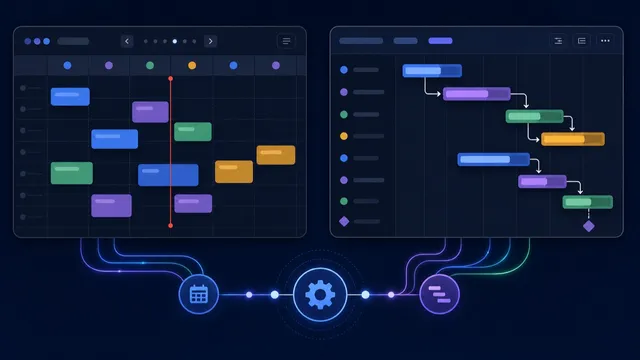
Two new interactive A2UI planning elements — a month/week/day Calendar and a dependency-aware Gantt timeline — that render from your data and fire every drag, resize and edit back into a workflow.

Speech-to-text and text-to-speech nodes land in Flow-Like: hosted providers and fully local, on-device models (Whisper, OLMoASR, Kokoro and more) running on candle — private by default.

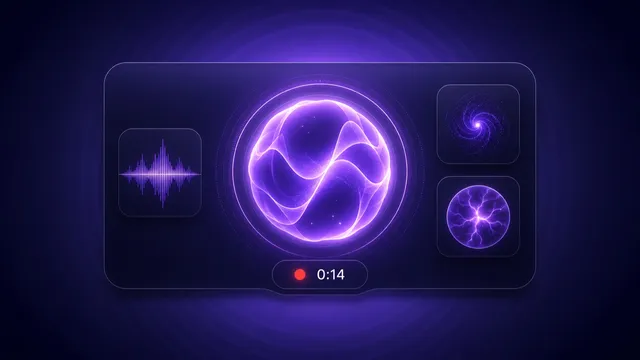
A new Voice Input element, seven animated audio visualizers, an animated player, and a full-screen conversational Voice Mode — all built on one shared, reusable voice toolkit.

Flow-Like's node info panel now deep-links straight to each node's documentation page — reconstructed from the node itself, with no lookup table — plus a faster search on the docs site.

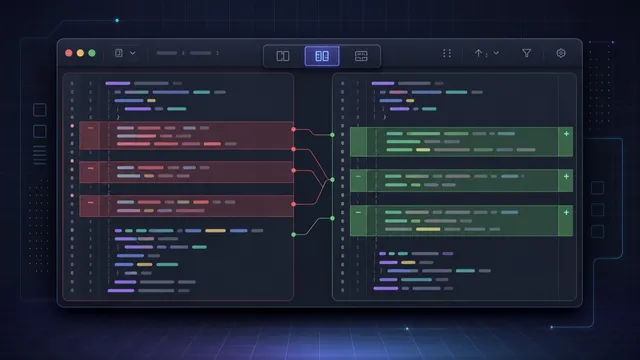
The new diffView element brings side-by-side, unified and inline diffs — for text, code, markdown, JSON and documents — into the Flow-Like widget builder, with syntax highlighting.

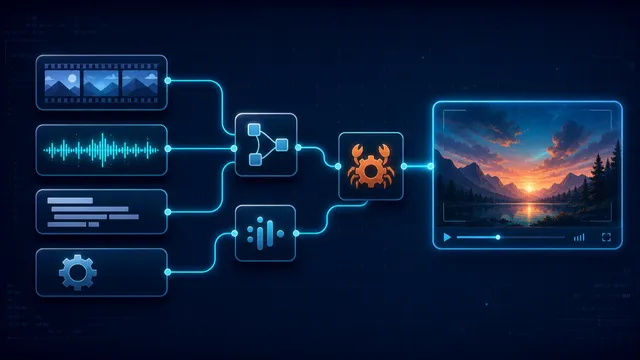
Thirty new video nodes land in Flow-Like: transcode, trim, concat, thumbnails, subtitles and HLS packaging — all powered by our own pure-Rust video-utils-rs, no FFmpeg binary in sight.

An honest comparison of Dify and Flow-Like—two powerful platforms that excel in different scenarios. Learn when to use Dify's GenAI focus versus Flow-Like's typed automation.

An honest comparison of n8n and Flow-Like—two powerful automation platforms that excel in different scenarios. Learn when to use each tool and how they can complement each other.